





Accountants for small businesses
Simplify your accounting.
Stay ahead of tax deadlines.
Focus on what matters most.

Finding the right small
business accountant
Your accounting needs change as your small business grows and shrinks. During growth stages, you’ll need one that can keep up with your bookkeeping as you go from one person to a larger team. They’ll also be helpful in guiding you through determining your financing options for covering payroll, buying equipment, and leasing/purchasing office space.
Additionally, an important part of this relationship is making sure that your staff is aligned with your accountant’s needs, i.e., they’re accurately filing receipts and watching cash flows, not to mention generating accurate ledgers when it’s time for taxes or applying for financing.
A small business accountant with experience in how to grow—and with a network of service providers and resources that cater to small companies and solopreneurs—is vital. Accountants are also important to have as you take on a partner, look at retirement plans, or make a plan for how to exit your company.
Each small business accountant will have their core area of focus, so it’s not uncommon to change your accountant as your company’s needs change. This page will help you learn the right questions to ask when evaluating your accounting options and when it is time to change accountants based on your current and future needs.

Basic Accounting and Taxes
When you’re first starting out as a solopreneur or your business is still new, a single accountant, partnership, or three-person accounting team are likely your best options. They’ll be able to:
-
Check your accounting software and sync it with your bank account.
-
Tell you which service provider to use for payroll and incorporate it into your software.
-
File your business taxes.
Best of all, smaller and independent accountants are more affordable. Further, they understand that you need to focus on your business, not on itemizing each receipt and worrying about your P&L statements.
As your company expands and you have multiple employees, contractors, and vendors to track; you may outgrow the small and independent accounting firms. At this point, you’ll want one with a bookkeeper on staff, an admin to file receipts for you, and the experience to help you implement safe and compliant growth strategies.
When it’s time to grow, ask the new accounting firms about:
-
Modifying your corporate structure to one that makes sense for your new size.
-
What you should be aware of when you bring on a business partner or hire new leaders.
-
How to split equity and reward employees at different levels in the company.
-
IRS requirements for withholding, deductions, and the rules of IRS Section 409A and ERISA.
-
The types of financing that you should use at different stages of growth over the next 5 years (with specific examples based on your unique expansion plans).
-
How to source and get better pricing for products, supplies, and materials.
These are the pieces of information that small business accountants with experience in your industry will be able to share. When they give you specific examples, it means there is a good chance they’ll be able to guide you effectively with real knowledge and expertise. This takes the guesswork out of the financial side of running and growing your business.
Some situations may call for merchant cash advances while others could use equipment financing or a small business loan. If they know your industry and companies similar in size, they’ll help you make the right decisions.

Retirement planning
Most accountants will be able to walk you through your options, from a solo 401K to IRAs and plans with a Roth option. But their job is not to help you retire, only to manage the tax portions and contributions. So, make sure you have a good idea of what you’ll need based on the lifestyle you’re hoping to enjoy during your retirement years.
What separates bad from good accounting firms is the accountant in question knowing how and when to change strategies. If your team is currently all contractors, but you plan on bringing full-time employees, your plan options will need to change. A solo 401K may be beneficial for you now, but it’s not something you’ll be able to use when you build a full team, as retirement benefits are sought after by employees in just about all industries.
Your accountant always needs to know what the goal for your business is. And they need to be able to present you with options that make sense based on that goal. Plus, they need to explain your options in a way that is easy to understand.
A good accountant will be able to answer questions about the retirement option you want and present a good alternative if you’re unsure about it. This includes the specific reasons you may want to choose the alternative. A great accountant will also be able to create a plan that keeps your retirement on track even if your original strategy doesn’t work out. This may include tapping into an existing relationship they have with a financial advisor, as they work side by side to ensure you remain in a good financial position.
Note: There are regulations around how much you can contribute as an employer depending on your retirement plan. There are also plans that are more focused on cost savings and options that are designed to help you retain staff through satisfaction. Be sure to talk through all your options with your accountant to see what works best for your business.

Business credit cards
The right accountant for your small business will be able to walk you through business credit card options and help you choose which is right based on your company’s needs. When you ask, “Which business credit card is best?”, don’t settle for an immediate answer.
Your business is different from that of your accountant. If they say they like a specific option because it gives them a certain perk or benefit, they did not listen to your specific need. The better response would be for the accountant to ask you questions to learn more such as:
Do you travel a lot for business?
What types of perks matter most to you?
Will you be hiring an assistant or do you have a need for a concierge?
How much of an annual fee are you comfortable with?
How high of an interest rate are you willing to take on?
Each question is important for determining the right solution. If you’re always on the road, travel points, lounge access, and upgrades can be better perks than cashback. However, for business owners who stay put and buy equipment and supplies regularly, cashback puts money back into the company for each operational expense.
Make sure the accountant or accounting firm you’re interviewing for your small business asks about your business needs before recommending a card. These small details make a huge difference in how your relationship and accounting will be handled.

See your top options in seconds
Financing growth and reducing size
Your accountant will need to be prepared for different stages of your business, including the growth stage, the reduction in size stage, and the stage of retirement/selling the business.
As you grow, they’ll need to be able to evaluate your cash flows along with a bookkeeper to determine which types of financing you can and cannot afford. Similarly, your accountant needs to help determine which costs can be cut and in what order as you downsize if things don’t go well.
When interviewing accounting firms for your business, make sure that their representatives have experience in the various stages of business so that you’re supported throughout the life of your company.
Bookkeeping
Not all accountants offer bookkeeping services, and small business accountants that do may not be able to handle a growing company if they’re limited on time or staff.
If you have a rapid expansion plan, you’ll want a bookkeeper that can keep up with the growing workload. And you’ll want to know what they will cost you. They’ll be the ones determining what you have available and where cuts can be made along with your accountant.
A smaller accounting firm that is always behind on your account may slow your progress. Or worse, they may mess up your books, and your financials will not be accurate. Make sure they have enough staff and bandwidth to properly manage your books. If you decide you want to downsize, look for a bookkeeper that has experience in liquidating assets and helping to reduce costs as this experience can come in handy.
When evaluating if it is time to change accounting firms, look to see what your needs are now and what they could be in two to five years.

Exiting or being acquired
The small business accountant you started out with may be the right one to close and exit with if you have already reduced size. When you’re ready to retire, they should be able to guide you on what to do with taxes, your business entity (LLC, S Corp, etc.), and your EIN.
An accountant with experience in liquidating company assets can tell you how to price assets, what to send to auction, and what to donate. This saves you time and may make you more money. Certain pieces of equipment can be sold directly to another business, while bulk inventory may be better off listed on online auctions to resellers and other retailers for the best price.
If you plan on selling your business, a good small business accountant can give their recommendation on any offers you receive and tell you if they’re fair or not. A great accountant will be able to connect you with business brokers and tell you what to expect and how to handle the agreement.
Knowing which accounting firms make sense at each stage of your company is vital to your success. The same accountant that helped you when you were starting out may not be the one you used when you had a larger team. But they still might be your best option for when you’re ready to retire or sell. The original accountant may be more familiar with vendors that sell small businesses, helping you to close your sale faster.
Why America’s
SMBs love using SBL
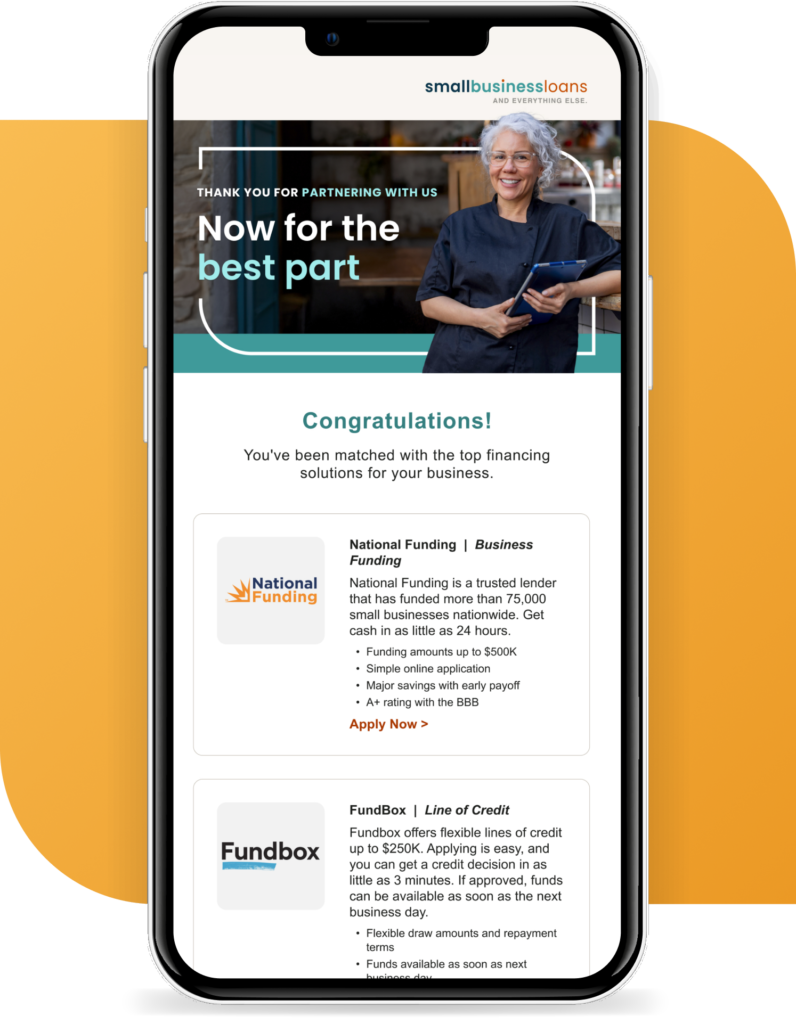
The SmallBusinessLoans marketplace was built to serve small and medium-sized businesses (SMBs). Here’s how our platform sets you up for success.


Tailored solutions: We only match you with products and services that cater to your unique needs and profile.


Trusted partners: All of our partners go through an extensive vetting process, so you can move forward with confidence.


Free service: See all the best solutions for your business without any cost or commitment. It only takes seconds!
